Canadian headline inflation surged 3.2% in May, its highest level in 29 months. This surprised the analyst consensus, which was expecting a 3% acceleration in headline inflation.
However, core inflation, which excludes food and energy prices, was flat at 2.05% in May – indicating that high oil prices are not seeping through the broader economy.
This is a critical piece of information for the mortgage rate forecast in Canada: The Bank of Canada is likely to be more dovish on this report, as it is primarily concerned with core inflation.
If oil prices near $100 are not yet moving the core inflation needle, then oil prices at $75 in June are likely to reduce this inflationary pressure.
There will, of course, need to be sustained oil prices at $75 or lower for the Bank of Canada to fully take rate hikes off the table. But for the time being, it looks safe that the Bank of Canada is on track for a hold in 2026.
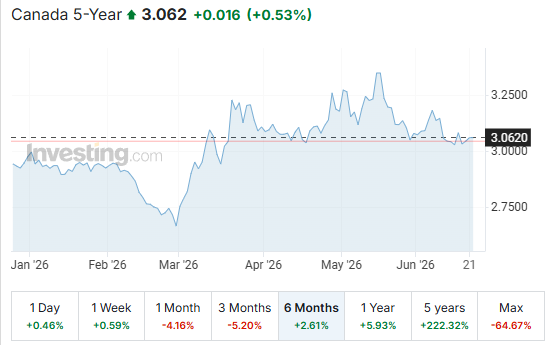
If Government of Canada bond yields remain near 3%, we should see slight declines in fixed mortgage rates over the coming days and weeks. The Banks need to see stability in yields before they make any sudden movements with rates. However, things are certainly heading in the right direction.