Headline inflation slowed from 3.2% in May to 2.8% in June on lower gas prices; however, with gas prices up in July, this is likely to be reversed in next month’s inflation release.
Excluding gas prices, inflation held steady at 2.2% month over month, meaning that as of today, the higher gas prices caused by the Iran war have not trickled through the broader economy.
However, oil and gas prices aren’t the only inflation factor.
In last Wednesday’s Bank of Canada meeting, it was reported that the mid range neutral rate is likely 0.50% higher than the current 2.25% overnight rate. Moreover, Governor Tiff Macklem suggested that the current 2.25% rate is low enough to support or stimulate the Canadian economy.
Looking ahead at the potential:
- Q2 GDP hits 2.5% growth, as the BoC projects.
- Economic growth holds steady (ie. no major change in CUSMA, + major AI investment)
- Oil remains above $80 through 2026
…becomes a recipe for future rate hike concerns.
Moreover, although not the base case, the BoC made clear that a significant rise in oil from here (ie. back to $100) would eventually feed into inflation and require ‘consecutive rate hikes’ to keep inflation under control.
Mortgage Rate Trends
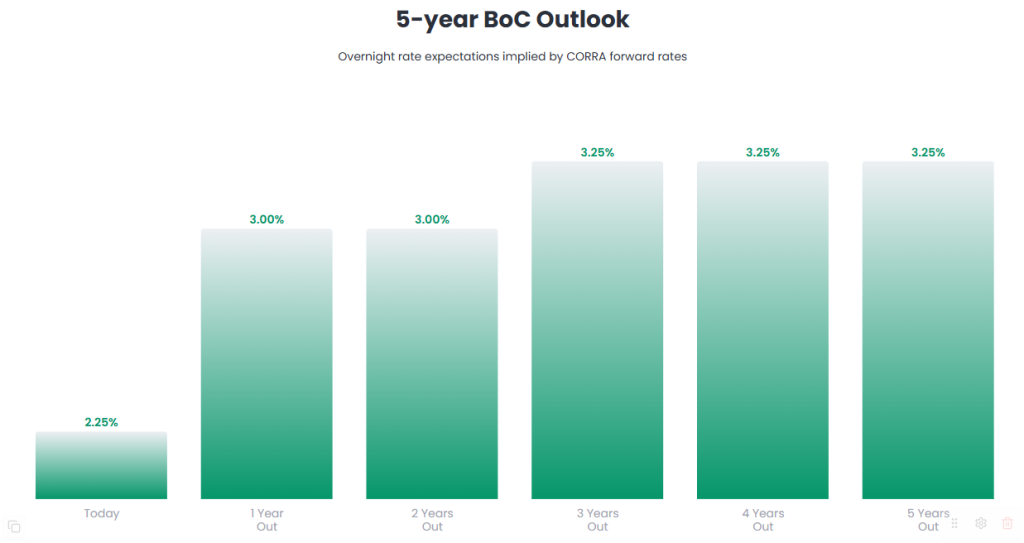
Financial markets are pricing a 39% chance of a BoC hike at their October meeting and approximately a 60% chance of a hike in Dec 2026.
Overall, I believe it’s unlikely we’ll see a hike in 2026. However, the market odds are undecided about December, and as we move into 2027, the market data is confident in projecting at least one hike in 2027, and this would increase variable mortgage rates by at least 0.25%.
How Oil prices affect inflation in 2026 remains the primary deciding factor for BoC decisions within the next year.